It’s taken me some time to write a post like this. I feared ridicule and judgement from people who I considered to be more of an authority in one way or another. I lacked the confidence to share what I know from my own learning experience because I don’t have a medical degree and I’m not a scientist.
However, I am a woman. I have a brain. I have intuition. And I know when I know. You just have that feeling. And nothing, nothing can deny the power of this feeling when it surges through you. I’ve also learnt a lot in my time on this planet. I’ve studied hard and continue to do so, I’ve read and continue to read a lot and I know from experience what I know now.
We all have mental health.
That chatter in my head has stopped me speaking out before now. The impostor syndrome. The lack of confidence because of past negative experiences. The lack of support from supposed loved ones who say “hi, how are you?” but behind your back chatter about what you’re doing as if you’ve gone nuts because you don’t fit into their paradigm of what is apparently normal. People who take the mickey out of what you do…making jokes about it, making fun of it like you’re some sort of clown in the circus.
I’m not a clown in a circus. I’m a human being just like you. I have feelings…I have thoughts…I have emotions and these all have an impact on my physiology and how my biology responds, in any given moment, just like they do with all of us. This mind-body response is what creates symptoms. And it’s real…even if you can’t see the symptoms.
That’s your world view
Just because I practice meditation and use tools like EFT and yoga, spend a lot of time in nature and eat what many have judged me for and said is a rabbit’s diet, doesn’t mean I’m some sort of freak. I don’t drink alcohol either and was once told I’m not a member of my own family because of this.
The thing is, and what most people are missing in this is, I live the life I lead because I started life with a whole flipping string of symptoms. And these symptoms have fuelled me on to get to the root cause of why I started life this way and why many symptoms plagued me for many years…and some still do.
What people see or choose to see in me is someone who is happy and smiles a lot…who bounces around like Tigger and is always here, there and everywhere, apparently living a carefree life without a ‘normal’ 9-5 job. What you don’t know is I’ve struggled with a low sense of self-worth for a long time. I struggled with some symptoms that left me feeling so dark, I wouldn’t go out for days and days at a time because of how I felt and looked and the fact my skin was cracked and bleeding. I’ve been in so much pain at times that I’ve been reduced to using crutches and wheelchairs. You don’t see this though because most of us hide away when challenged like this. And woe-betide if we complain about something which can’t be seen or isn’t visible like #endometriosis for example.
Changing times
Thanks to path-forging women like Elizabeth Day, Ella Mills, Penny Croal, Kate Marillat, Leisa Cockayne, Kelly Brogan MD, Julie Schiffman, Emma Barnett, Clare McKenna, Jasmine Hemsley, Rachel Flaherty, Kelly Noonan Gores, and some trusted friends and close family who’ve always encouraged me though, I’m sharing the following about endometriosis, in the hope it will reach those who need it and help one person at the very least, with a deeper understanding of why their body is behaving the way it is.
Endometriosis is said to be one of the most common causes of pelvic pain and infertility in women according to endometriosis.org – the global forum for news and information. In the news section of their website, they state that “Scientists are now closer to understanding pain mechanisms in endometriosis. Scientists at the University of Warwick and the University of Edinburgh in the UK have shown that immune cells called macrophages could play a key role in the generation of pain in endometriosis”.
Looking at the dis-ease process of endometriosis from a meta-perspective
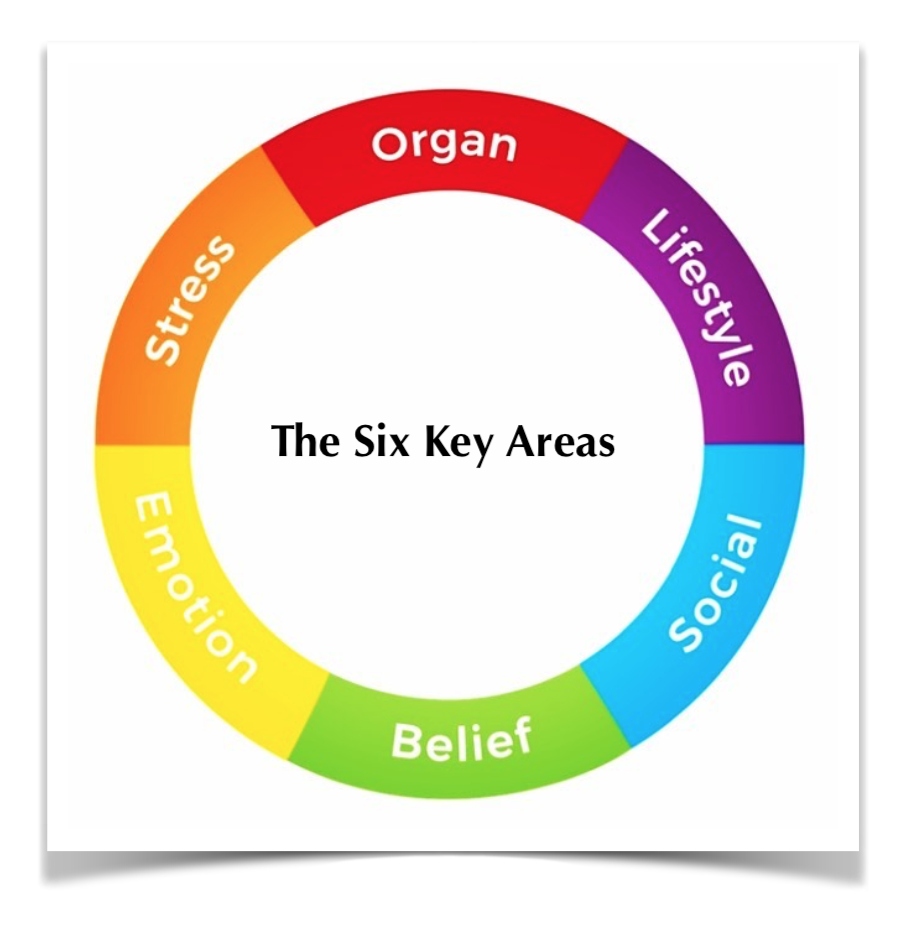
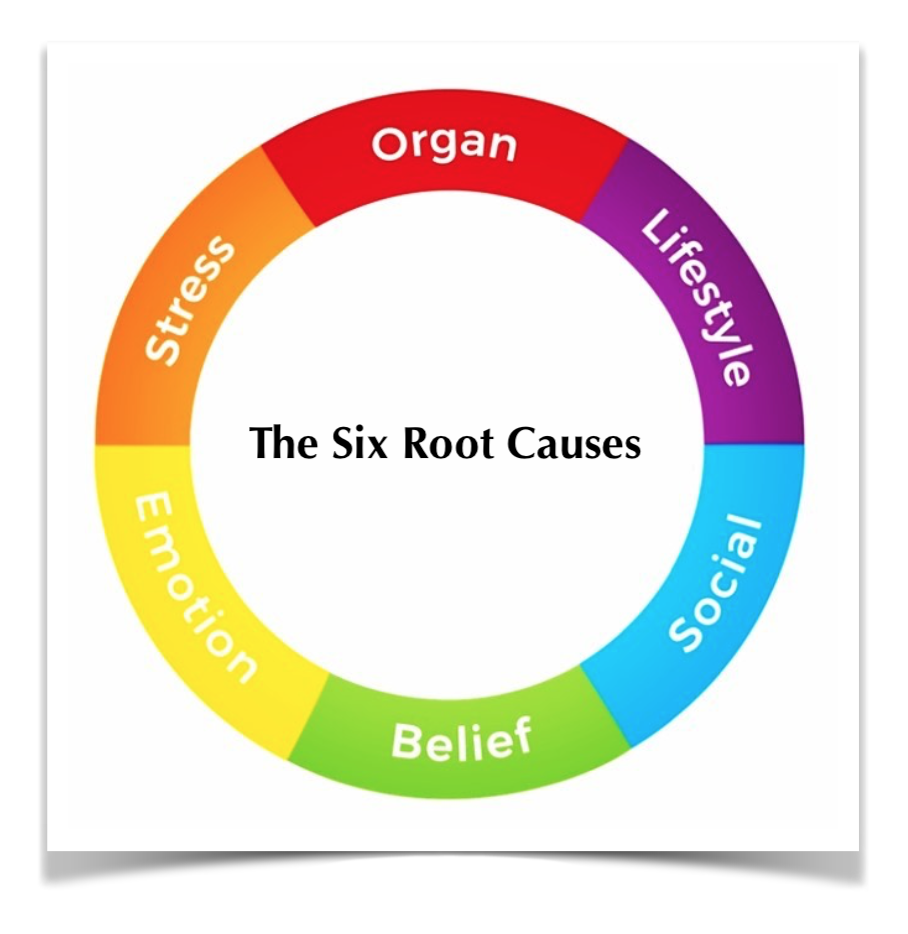
It’s great that research is being done at this micro-level in an attempt to get to the root cause of what’s underlying these debilitating symptoms in what is estimated to be affecting “176 million women worldwide regardless of their ethnic and social background”. However, has anyone stopped to look at, explore and research the bigger picture of what’s going on for these millions of women prior to the onset of their symptoms? For example, what stresses may have been happening for them? What emotions and thoughts may be present and on-going? How do they perceive their home, work and/or social lives? And what’s their lifestyle like, including diet, exercise and vitality?
These aspects all play a key role in understanding what is happening in anyone with the onset of symptoms, be it endometriosis or any number of other diagnoses. So let’s look at this more closely for endometriosis.
The biology – the development and function of the ovaries
As we know, the ovaries are positioned on the right and left side of the uterus, which they attach to via cord-like ligaments. During the monthly menses, an egg, formed from primordial germ cells, grows into a tiny follicle. At the time of ovulation, the follicle bursts open, so the ovum can be released and travel from an ovary through the fallopian tube to potentially meet a sperm for fertilisation. If this stage was successful, approximately six days later, the fertilised egg or blastocyst implants in the uterine cavity. The corpus luteum, a progesterone-producing cell cluster in the ovaries, facilitates pregnancy. The ovarian tissue contains interstitial cells, which produce estrogen and small quantities of testosterone. Estrogen plays a significant role in a woman’s sex drive and readiness to mate. In embryology terms, the ovaries originate from the new mesoderm and are therefore controlled from the cerebral medulla, which is part of the new brain in brain development.
Conflict theme
Every organ and organ tissue in the body is biologically connected to one of the brain layers…and each of these brain layers has an overall biological conflict theme, as discovered by Dr Hamer, who first developed what is now known as Meta-Health (also known as Meta-Consciousness or Lifestyle Prescriptions).
The biological conflict related to the ovaries is a loss conflict which is connected to the loss of a loved one. A perceived fear of losing a loved one can also trigger the conflict. This same stress can also be related to the loss of a beloved pet. Ruminating self-blame after a relationship break-down or the death of someone close can keep the conflict active. Women also experience loss conflicts after miscarriages or the unwanted termination of a pregnancy. A loss conflict can also be set in motion because of an argument, disloyalty, or unfaithfulness of a partner or friend.
This sense of loss can also be passed down the ancestral line as well, due to cellular memory e.g. the egg which became you was inside your mother, when she was in utero. Therefore, if your grandmother experienced a loss while pregnant with your Mum, this memory can pass on into your cells too. This is what is commonly thought to be hereditary or genetic type symptoms. Only about 1% of symptoms fall under this umbrella however, as proven by cell biologist, Bruce Lipton. The rest are down to the passing on of ancestral trauma, beliefs and patterns, all of which have the potential for healing.
The stress phase of the biological process in the ovaries
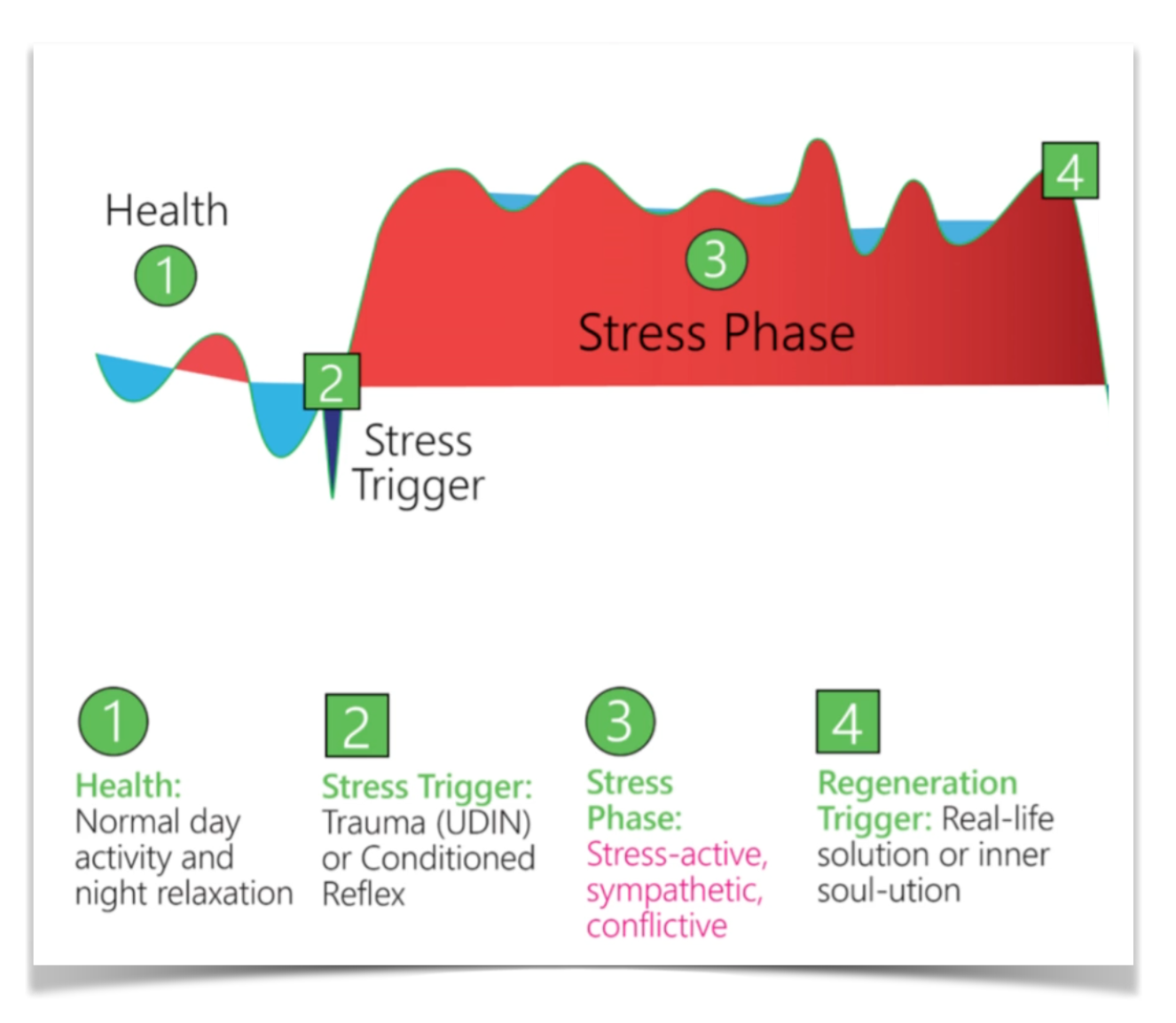
When we experience something, which to us as an individual feels unexpected, dramatic, isolating and we don’t have a strategy to deal with it at that moment, we are pushed into stress…also known as the sympathetic phase in biological terms. Biologically, therefore, the ovarian organ tissue of a woman who perceives a situation as stressful and feels this sense of loss will respond by necrosis (cell loss) in the ovary. As a result, because of the reduction of estrogen-producing cells the estrogen level decreases. Furthermore, depending on how intense the conflict is felt and lasts for, (i.e. how long the woman remains in the stress phase, impacted by this trauma) can result in irregular periods, absence of menstruation altogether, or infertility until the stress is released and the conflict is resolved for the individual. If this stress is felt before menstruation has started, (e.g. in a younger girl), it can delay the start of the menstrual cycle. The felt loss of an unconceived child can also lead to long-term infertility.
The restoration phase of the biological process in the ovaries – part 1
Following the full resolution of something which we perceived as stressfulI, biologically, we move into the para-sympathetic phase of the healing process. Therefore, in the ovaries, if and when the stress has been fully resolved, the tissue loss which happened in the sympathetic phase is restored with new cells, assisted by bacteria such as streptococcus in an ideal scenario. Though counter-intuitive to our conditioned minds of what constitutes healing, symptoms experienced are pain caused by the swelling. This is usually diagnosed as inflammation or an infection of the ovaries and called adnexitis (the same term is used for inflammation in the fallopian tubes).
Again, counter-intuitive to our western conditioned medical understanding of what is normal, a special characteristic regarding the healing of the ovaries is the development of an ovarian cyst. Now, this is where it’s important to understand the biological process – provided there aren’t any relapses i.e. reminders of the original stress, which push us back into the sympathetic phase and interrupt the parasympathetic restorative healing phase, the process takes – like a pregnancy – nine months to complete. The cyst formation occurs in several steps.
In the first half of the parasympathetic phase, a fluid-filled capsule or cyst forms at the site of the original cell-loss (necrosis). Coupled with water retention, (which can be exacerbated by a separate, yet related stress conflict associated with feelings such as isolation, abandonment and existence and activates in the kidney collecting tubules), an ovarian cyst can become quite sizable because the water retention is especially stored in the healing area. Large cyst(s) cause considerable pain, particularly during menstruation, and heavy menstrual bleeding. What is termed polycystic ovaries (PCO) actually relates to multiple loss conflicts resulting in many cysts forming over time.
With regards the continued parasympathetic phase of the biological process with the now-formed cyst, (provided this process isn’t interrupted by retriggers into stress again), in order to restore the cell loss that occurred during the stress/sympathetic phase, ovarian cells start to increase rapidly in number inside the cyst. During this stage, the cyst attaches itself to neighboring tissue for blood supply. NB: attaching to tissue nearby also stabilizes the cyst. Detected during this period, the growth can be diagnosed, in modern medical terms, as an invasive or infiltrating ovarian cancer and wrongly assumed to metastasize to nearby organs. Based on the basic laws of biology however, the new ovarian cells cannot be regarded as cancer cells because the cell increase is actually in truth, a restorative, rebuilding process.
Restoration phase – part 2
At the mid-point of this restorative parasympathetic phase, we reach what is called a healing peak, which temporairly pushes the body back into a state of stress, which may include symtoms such as restlessness, nausea, heightened blood pressure, raised pulse, cold sweats, shivers. The biological purpose of this temporary sympathetic surge is to quickly eliminate the edema which developed both on the organ and in the correlating brain relay in the first part of the restorative phase. After this healing peak, we experience a urinary phase, where the body expels the excess fluid. NB: The excess fluid cannot be completly expelled if there is still an active stress conflict related to feeling isolated/abandoned OR if there are still retriggers (often unconscious) of the loss conflict. This remaining water retention will stay present until all conflicts have been fully resolved.
Following the hopefully successful release of most fluid from the cyst, in part two of the restorative phase, the cyst then becomes hard, separates from the tissue it had attached to and, supplied with blood vessels, integrates itself completely into the hormone-producing function of the ovaries. This is completly natural and part of the biological process and purpose. To explain further, the boost of estrogen provided by the cyst makes the woman who’s felt this loss more attractive again, while at the same time, enhancing her readiness to mate, which biologically, elevates her into an ideal position to make up for the loss and become pregnant again. It’s the nature-nurture process.
Interruptions to the biological process
Sometimes the internal pressure, if a cyst is rather liquid, can become too intense, causing the cyst to burst. There could be a few causes for this to happen, such as the extra water retention due to the other active conflict related to feelings of isolation; a punch to the stomach; an accident; an investigative puncture, or premature surgery can cause the cyst to burst.
Following the burst, the fluid moves into the abdominal cavity, and the now loose ovarian cells attach themselves to the abdominal wall or an organ such as the bladder or rectum (in these circumstances, the cyst development takes place outside the ovary). This is what is termed endometriosis. According to modern medicine, endometriosis is a growth of endometrial tissue outside of the uterus.
However, through the scienific research which was carried out by Dr. Hamer, who examined brain CT scans of women with these symptoms, every scan highlighted that each woman with endometriosis showed the moment of conflict stress wasn’t in the brainstem layer of the brain, which controls the endometrium (the inner lining of the uterus) but instead it was in the cerebral medulla, i.e. the area of the brain which controls the ovaries. Furthermore, this also clarifies why endometriosis increases a woman’s estrogen level – an aspect which has apparently been unexplainable before now.
Closing thoughts
So to conclude, without going into further biological explainations and rabbit holes, this post is not about blaming or shaming anyone into anything. It’s to explain a simple natural biological process, which women go through when we experience what to us feels like a loss – it’s stressful, feels unexpected, dramatic, isolating and we don’t have a strategy to deal with the shock in that moment.
It’s to explain the side of endometriosis which may not have been explained to you before now. It’s to give you some sense of power and strength that something can be done to support you to complete your natural healing cycle in all aspects of your life related to your endo-experience and find an end to your debilitating symtoms. It’s to offer you a sense of understanding that your body is not working against you for one second – on the contrary, in any given moment your magnificent body is always working to keep you safe and survive, constantly adapting to the changing environment it finds itself in and adjusting to this, to support you to keep going.
We have been fed this inaccurate paradigm in modern medicine that pain, swelling, inflammation etc equals something going wrong in our body…whereas it’s often present in an attempt to help protect us from something which has been stressful for us…and the symptoms women experience in endometriosis are actually a natural part of a biological healing cycle…which is doing its best to complete.
If you have any questions about this related to your own endo-journey and how a meta-health analysis could suport you, do get in touch, where I will do my best to support you.